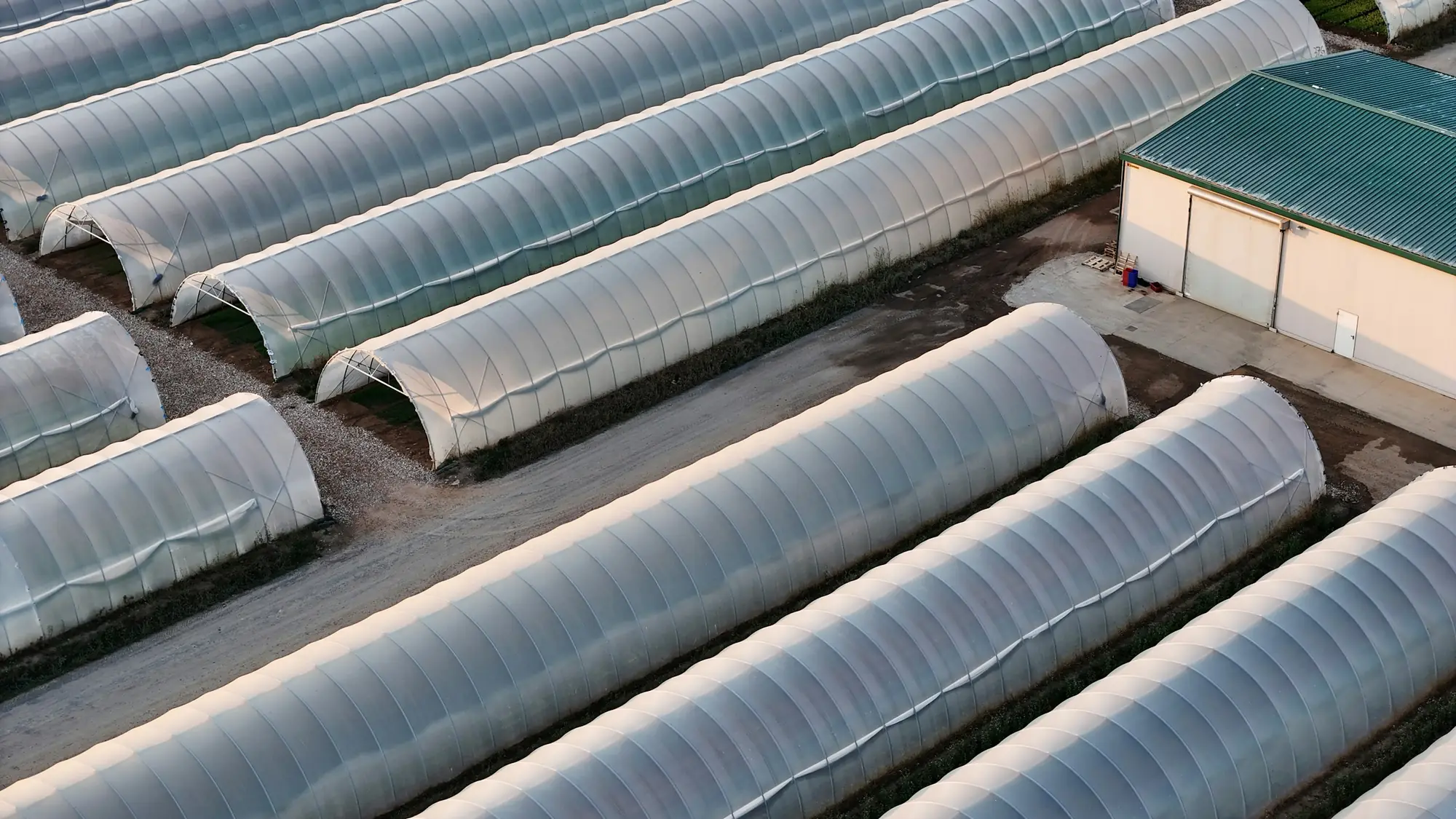
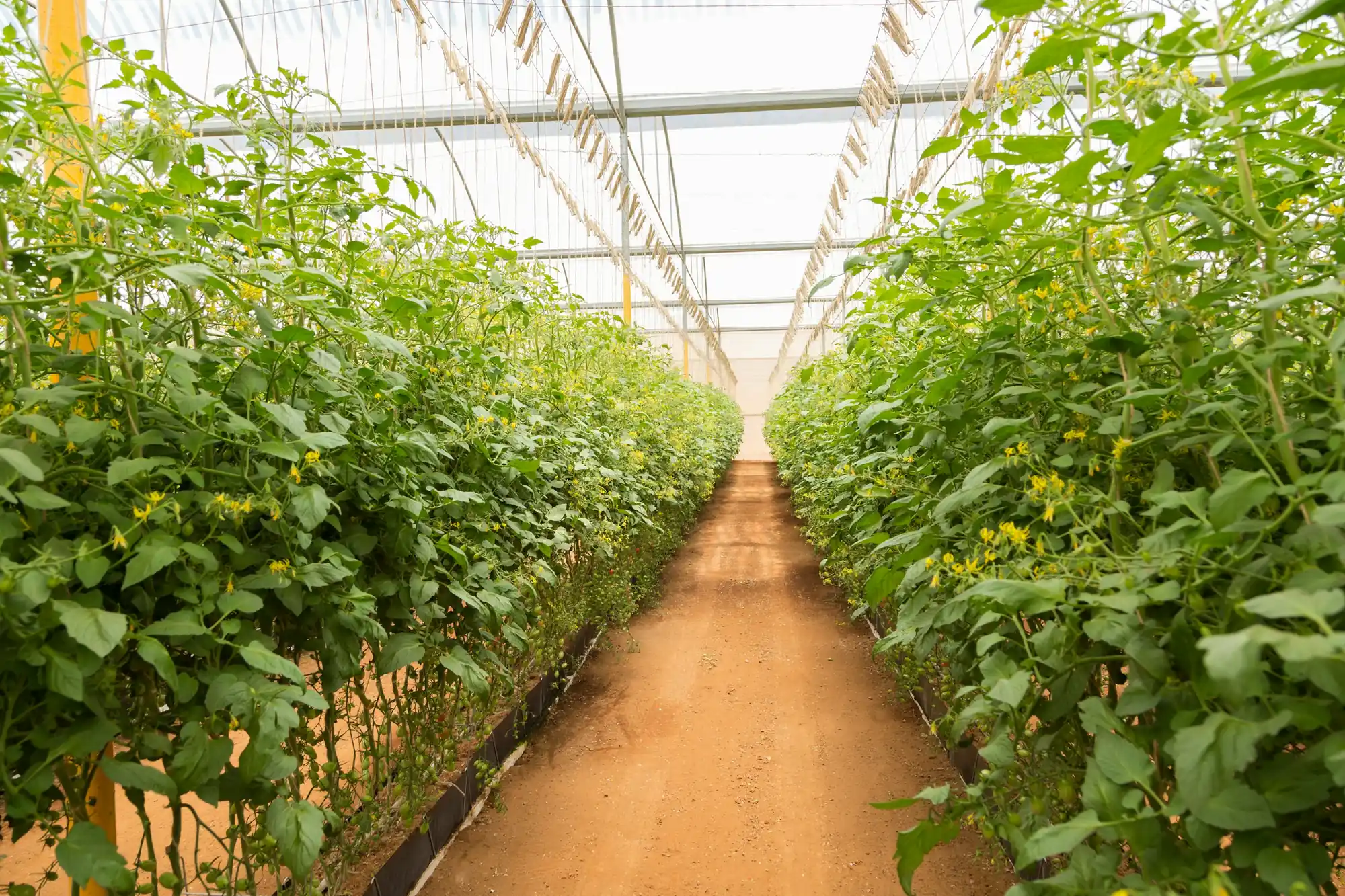
Polyhouse farming has transformed Indian agriculture. By controlling climate variables — temperature, humidity, light, and ventilation — polyhouses enable year-round cultivation with 5-10x higher yields compared to open field farming. But the investment question remains: how much does a polyhouse actually cost per acre in India?
This guide provides an honest, detailed cost comparison between the two most popular polyhouse types in India — NVPH (Naturally Ventilated Polyhouse) and Fan & Pad — with 2026 pricing, subsidy calculations, and real-world ROI numbers.
What is a Polyhouse?
A polyhouse (also called a greenhouse) is a structure covered with transparent polyethylene film that creates a controlled microclimate for crop cultivation. It protects crops from rain, wind, pests, and extreme temperatures while allowing sunlight to penetrate for photosynthesis.
India has approximately 50,000 hectares under protected cultivation, and the government targets 100,000 hectares by 2030 through MIDH and NHB schemes — creating a massive opportunity for farmers and agri-entrepreneurs.
NVPH vs Fan-Pad: Side-by-Side Comparison
| Parameter | NVPH | Fan & Pad |
|---|---|---|
| Cost Per Acre | ₹35–50 Lakh | ₹55–80 Lakh |
| Cooling System | Natural ventilation (ridge + side vents) | Mechanical (exhaust fans + wet pads) |
| Temperature Control | ±5°C of ambient | Can reduce 8-12°C below ambient |
| Best Climate | Moderate zones (most of India) | Extreme heat zones (45°C+ summers) |
| Electricity Cost | Minimal (₹5-10K/month) | ₹25-50K/month |
| Best Crops | Tomato, cucumber, leafy greens | Capsicum, cherry tomato, flowers, exotic veg |
| Subsidy | MIDH 50% | MIDH 50% |
Detailed Cost Breakdown Per Acre
NVPH (Naturally Ventilated Polyhouse) — ₹35-50 Lakh/Acre
- GI Structure (pipes, gutters, brackets): ₹14-18 Lakh
- Cladding (200 micron UV-stabilized polyethylene): ₹3-5 Lakh
- Shade net + insect net: ₹2-3 Lakh
- Drip irrigation system: ₹1.5-2.5 Lakh
- Fertigation unit: ₹1-2 Lakh
- Mulching + ground cover: ₹0.5-1 Lakh
- Growing media (cocopeat, perlite): ₹2-3 Lakh
- Installation + civil work: ₹5-8 Lakh
- Miscellaneous (wiring, tools, training): ₹2-4 Lakh
Fan & Pad Polyhouse — ₹55-80 Lakh/Acre
All NVPH components plus:
- Exhaust fans (48" industrial, 8-12 units): ₹3-5 Lakh
- Cellulose cooling pads: ₹2-4 Lakh
- Water circulation system: ₹1-2 Lakh
- Automation/climate controller: ₹2-4 Lakh
- Additional structural reinforcement: ₹3-5 Lakh
- Higher electrical infrastructure: ₹2-3 Lakh
MIDH 50% Subsidy — How It Works
The Mission for Integrated Development of Horticulture (MIDH) provides 50% subsidy on the eligible cost of polyhouse construction. The subsidy is disbursed through the State Horticulture Department, typically in 2-3 installments linked to project milestones.
Example calculation for NVPH: Total cost ₹42 Lakh → MIDH eligible cost ₹38 Lakh → 50% subsidy = ₹19 Lakh → Your effective investment = ₹23 Lakh.
Example calculation for Fan & Pad: Total cost ₹65 Lakh → MIDH eligible cost ₹55 Lakh → 50% subsidy = ₹27.5 Lakh → Your effective investment = ₹37.5 Lakh.
Crop-Wise ROI Analysis
| Crop | Yield/Acre/Year | Market Price | Gross Revenue |
|---|---|---|---|
| Colored Capsicum | 25-35 tonnes | ₹80-150/kg | ₹25-45 Lakh |
| Cherry Tomato | 20-30 tonnes | ₹100-200/kg | ₹20-40 Lakh |
| Cucumber | 40-60 tonnes | ₹25-50/kg | ₹12-25 Lakh |
| Gerbera Flowers | 1.5-2.5L stems | ₹3-8/stem | ₹8-18 Lakh |
Operating costs (labour, inputs, electricity, maintenance) typically run ₹8-15 Lakh per acre per year. Net profit of ₹15-30 Lakh/acre/year is achievable with the right crop mix and market access. Break-even with MIDH subsidy: 2.5-4 years.
Common Mistakes to Avoid
- Choosing Fan-Pad when NVPH is sufficient: Don't overspend on cooling if your climate doesn't need it. Most of peninsular India, UP plains, and eastern India work fine with NVPH.
- Ignoring market access: The best polyhouse is useless if you can't sell the produce. Proximity to urban centers, export aggregators, or hotel/restaurant chains is critical.
- Skipping drip + fertigation: Flood irrigation inside a polyhouse wastes water, promotes disease, and destroys yields. Drip + fertigation is non-negotiable.
- Cheap structure materials: Substandard GI pipes rust in 3-5 years. Use ISI-marked, properly galvanized pipes with 15+ year life.
- Not filing subsidy before construction: Start the MIDH application process BEFORE construction. Post-facto subsidies are harder to get.
Why AgriMotion for Polyhouse Projects
AgriMotion Engineering delivers turnkey polyhouse projects across India — from land assessment and structure design to drip installation, fertigation setup, and crop training. We handle MIDH and NHB subsidy filing in-house, prepare bankable DPRs for bank loans, and provide a 12-month performance guarantee. Our polyhouse team has delivered projects across UP, MP, Maharashtra, Haryana, and Rajasthan.