100 – 400 sqm
Demonstration / Starter
₹6 – ₹18 L
Indicative project range
NHB / state schemes
- Single loop (media + raft)
- Fish tank 2,000–5,000 L
- Basic biofilter + sump
- Manual monitoring
- Suitable for institutions / pilots
Eight verticals, one engineering team — from the first survey to the last commissioning signature.
Condensing units, ZEAS and Conveni-Pack sized, supplied and commissioned by our own team.
Explore Daikin rangeBankable DPRs and scheme documentation, prepared by the engineers who design the project.
Tell us the crop, capacity and state. We map every scheme you can stack, before you spend on a DPR.
Check my eligibilityInstrument-grade calculators built on the same cost norms our engineers quote from.
Calculators give the range. Our engineers turn it into a site-specific BOQ with subsidy mapped.
Request an estimateGuides, cost breakdowns and state-by-state playbooks written by project engineers.
Design norms, cost sheets, DPR samples and scheme notes — organised the way a project is built.
Open the resource library
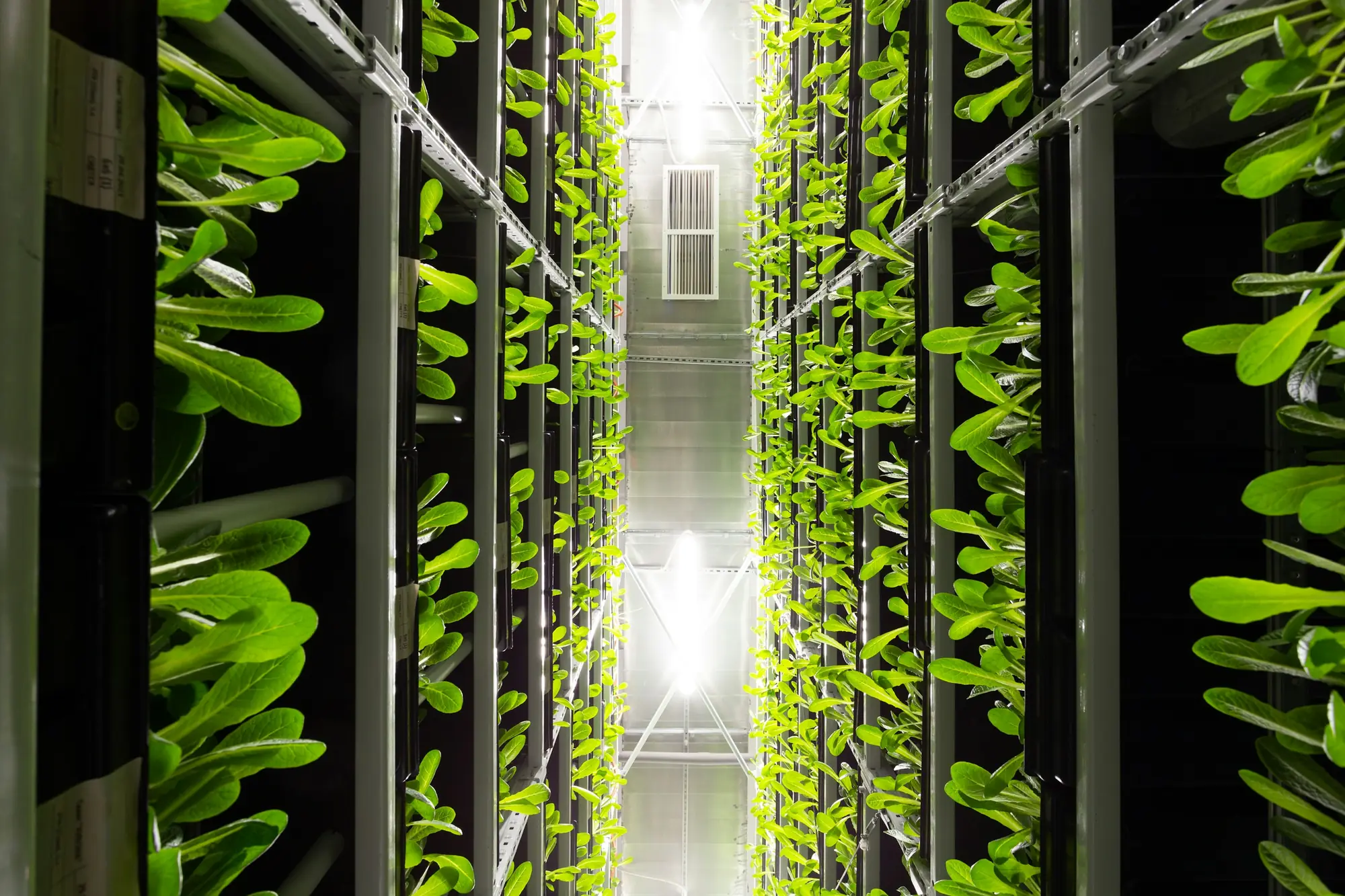
A 500 sqm commercial aquaponic unit typically costs ₹20–35 lakh. A 1,000–2,000 sqm farm ranges between ₹45 lakh and ₹85 lakh. Industrial plants (2,000–5,000+ sqm) range from ₹1–3.5 crore depending on automation, fish species and polyhouse spec.
Aquaponics is the most efficient integrated agri system available — fish waste fertilises the plants, plant roots biologically filter water for the fish, and the entire loop recirculates with under 10% water replacement per cycle. AgriMotion designs commercial aquaponic units under climate-controlled polyhouses, sized for HORECA leafy demand, exotic vegetables and high-value fish species.
A typical end-to-end delivery covers planning through post-handover support.
Food-grade FRP / HDPE tanks with RAS-grade swirl, drum and bio-filter sequencing.
Media-bed, raft (DWC) and NFT zones engineered for leafy, herb and fruiting crops.
Nitrification reactors, sump volume sizing and aeration for stable closed-loop operation.
pH, EC, DO, ammonia, nitrate monitoring with automated alkalinity and mineral dosing.
NVPH or fan-pad polyhouse for climate control, hail and pest protection.
Fish species selection (Tilapia / GIFT / catfish), stocking density, feed and crop calendar.
Each stage closes before the next one opens — nothing is ordered before the design is locked.
Water, market and species feasibility study.
Loop sizing, layout, RAS and polyhouse BOQ.
NABARD / NHB / AIF documentation filing.
Civil, tanks, plumbing, polyhouse, system cycling, handover.
Indicative ranges only. Final cost depends on site, capacity, automation level, structural design, material grades and freight.
All figures indicative and subject to revision. Subsidy approval depends on the sanctioning authority and current scheme guidelines.
Most project failures start where one vendor’s scope ends and the next one’s begins. We carry the whole scope — and the paperwork that funds it.
| Scope | AgriMotion | Local | DIY |
|---|---|---|---|
| Bankable DPR + BOQ | |||
| OEM-genuine components | |||
| Engineering drawings (GA / P&ID / SLD) | |||
| Subsidy filing (NHB / MIDH / AIF) | |||
| Single-point project ownership | |||
| Post-handover AMC |
Still unsure? Speak to an engineer — not a sales desk.
A 500 sqm commercial aquaponic unit typically costs ₹20–35 lakh. A 1,000–2,000 sqm farm ranges between ₹45 lakh and ₹85 lakh. Industrial plants (2,000–5,000+ sqm) range from ₹1–3.5 crore depending on automation, fish species and polyhouse spec.
Tilapia and GIFT Tilapia are the most common due to fast growth, water-quality tolerance and consistent demand. Catfish (Pangasius / Magur) also work well. Trout requires colder water and is suitable only in hill states.
Aquaponics recirculates over 90% of system water. Only 5–10% top-up is needed weekly to compensate for evaporation and plant uptake. Compared to open-field farming, the system uses 85–90% less water for the same vegetable output.
Yes. NABARD, NHB, MIDH (for the polyhouse component) and AIF (Agri Infrastructure Fund) all support aquaponics. State fisheries departments may add top-up subsidies. AgriMotion files the complete documentation for sanction.
Yes. Every project includes operator training during commissioning, an SOP manual for daily / weekly tasks, and a 12-month handholding contract covering water quality, fish health and crop agronomy.
A 500 sqm farm typically takes 90–120 days from order. A 1,000–2,000 sqm farm takes 4–6 months including polyhouse, system cycling and biofilter maturation before first stocking.
Pricing ranges shown are indicative only and depend on site, scale, material grades, structural design, freight and current market conditions. Subsidy approval depends on the sanctioning authority and current scheme guidelines.
A crop, a capacity and a location are enough to begin. Share drawings or site photos on WhatsApp if you have them.