Starter
Pilot Hydroponic Unit
₹25 – ₹55 L
Indicative project range
MIDH eligible
- 500–1,000 m² greenhouse shell
- NFT or DWC channels
- Basic fertigation skid
- Manual EC + pH monitoring
- Crop planning support
Eight verticals, one engineering team — from the first survey to the last commissioning signature.
Condensing units, ZEAS and Conveni-Pack sized, supplied and commissioned by our own team.
Explore Daikin rangeBankable DPRs and scheme documentation, prepared by the engineers who design the project.
Tell us the crop, capacity and state. We map every scheme you can stack, before you spend on a DPR.
Check my eligibilityInstrument-grade calculators built on the same cost norms our engineers quote from.
Calculators give the range. Our engineers turn it into a site-specific BOQ with subsidy mapped.
Request an estimateGuides, cost breakdowns and state-by-state playbooks written by project engineers.
Design norms, cost sheets, DPR samples and scheme notes — organised the way a project is built.
Open the resource library
A pilot 500–1,000 m² unit costs ₹25–55 lakh. A commercial 2,000–5,000 m² farm ranges between ₹65 lakh and ₹1.8 crore. Vertical / urban farms start at ₹2 crore and scale beyond ₹3.5 crore. Final cost depends on greenhouse type, system mix, automation level, climate control and location.
A profitable hydroponic project is not just about channels and pumps — it is about matching system to crop, climate to greenhouse, and automation to operating skill. We design NFT, DWC, Dutch bucket and vertical systems integrated with the right protected-farming shell, fertigation skid and monitoring layer so your unit produces predictable yield from week one.
A typical end-to-end delivery covers planning through post-handover support.
Recirculating thin-film system for leafy greens, herbs and microgreens — high-density layouts.
Deep Water Culture with oxygenated reservoirs for fast vegetative growth in leafy crops.
Bato bucket recirculating system for fruiting crops — tomato, capsicum, cucumber.
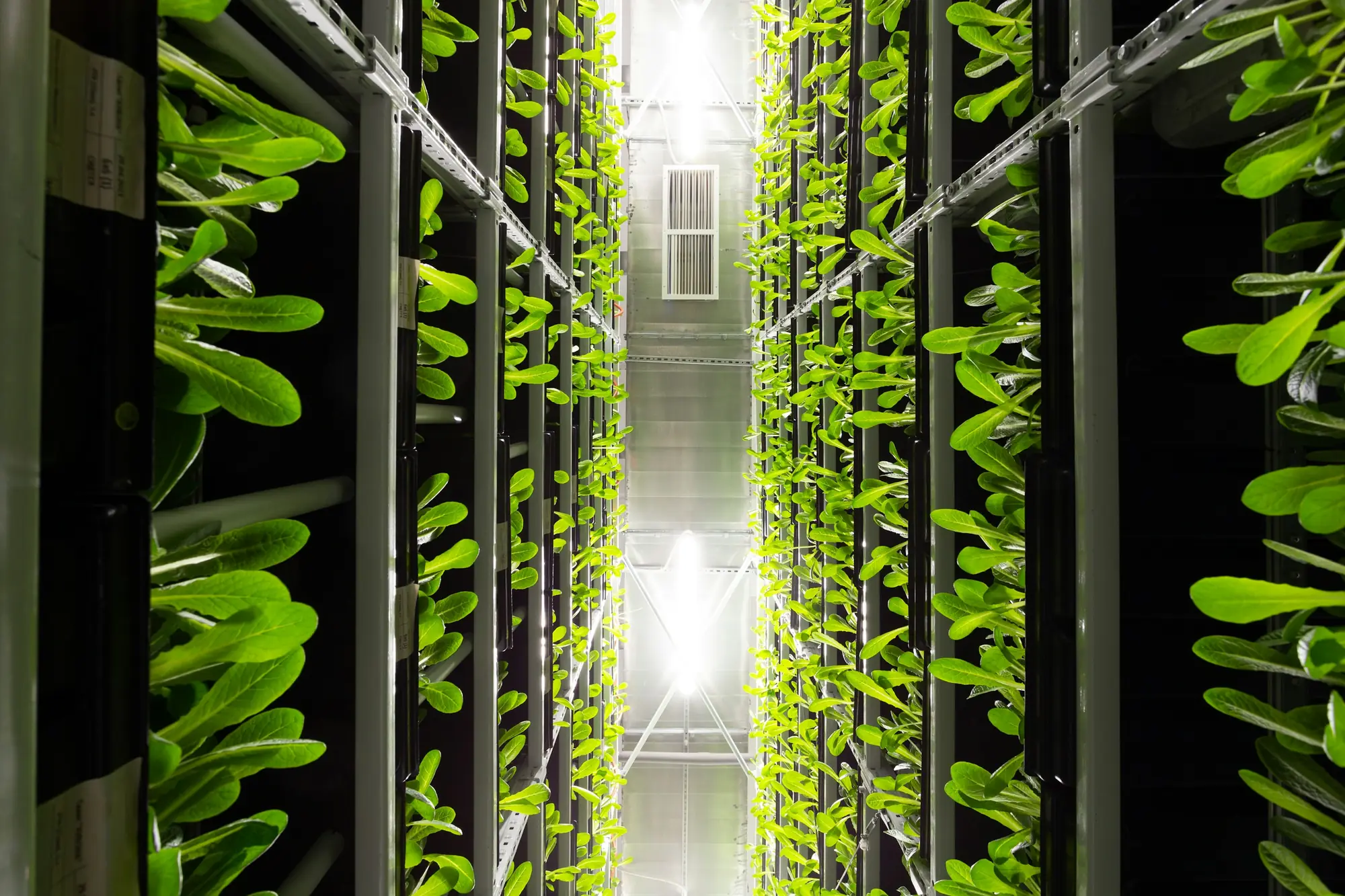
Stacked production with LED lighting and HVAC for urban / high-density commercial output.
Closed-loop fish + plant ecosystem with biofilter and recirculating beds.
Modular nursery infrastructure for commercial seedling and transplant production.
Each stage closes before the next one opens — nothing is ordered before the design is locked.
Crop selection, market mapping, ROI assumptions.
Greenhouse, system type, fertigation, itemised BOQ.
Bankable DPR + NHB / MIDH subsidy filing.
Greenhouse → channels → fertigation → trial run → handover.
Indicative ranges only. Final cost depends on site, capacity, automation level, structural design, material grades and freight.
All figures indicative and subject to revision. Subsidy approval depends on the sanctioning authority and current scheme guidelines.
Most project failures start where one vendor’s scope ends and the next one’s begins. We carry the whole scope — and the paperwork that funds it.
| Scope | AgriMotion | Local | DIY |
|---|---|---|---|
| Bankable DPR + BOQ | |||
| OEM-genuine components | |||
| Engineering drawings (GA / P&ID / SLD) | |||
| Subsidy filing (NHB / MIDH / AIF) | |||
| Single-point project ownership | |||
| Post-handover AMC |
Still unsure? Speak to an engineer — not a sales desk.
A pilot 500–1,000 m² unit costs ₹25–55 lakh. A commercial 2,000–5,000 m² farm ranges between ₹65 lakh and ₹1.8 crore. Vertical / urban farms start at ₹2 crore and scale beyond ₹3.5 crore. Final cost depends on greenhouse type, system mix, automation level, climate control and location.
NFT is best for leafy greens, herbs and microgreens — highest space efficiency. DWC suits leafy crops with simpler maintenance. Dutch Bucket is the only commercial choice for fruiting crops like tomato, capsicum and cucumber. We typically combine NFT + Dutch Bucket in commercial farms to diversify revenue.
Yes. Hydroponic projects executed inside polyhouses are eligible for NHB / MIDH subsidy of up to 50% on the protected-farming infrastructure component. State horticulture missions add top-ups in some states. AIF provides interest subvention for the asset component. Approval depends on the sanctioning authority.
Leafy greens (lettuce, basil, kale, microgreens) for fast-cycle revenue. Fruiting crops (cherry tomato, hydroponic capsicum, English cucumber) for high per-kg realisation. Strawberry as a premium crop in cooler climates. Crop selection must match your local market — we help map crop-mix to demand.
Yes. We provide on-site training during commissioning, written SOPs for daily operations (EC, pH, nutrient mixing, harvest), and remote support during the first crop cycle. AMC contracts cover fertigation skid, pumps and automation. Agronomy support is available via our consultant network.
Yes — commercial hydroponics needs a controlled environment, typically an NVPH or fan-pad greenhouse. The greenhouse protects against pests, weather and disease, while the hydroponic system handles nutrition and water. We design the greenhouse + hydroponic system as one integrated project.
Pricing ranges shown are indicative only and depend on site, scale, material grades, structural design, freight and current market conditions. Subsidy approval depends on the sanctioning authority and current scheme guidelines.
A crop, a capacity and a location are enough to begin. Share drawings or site photos on WhatsApp if you have them.