
AgriMotion Engineering
    NFT hydroponic channels in a greenhouse
    Soilless Cultivation

    Hydroponics Resource Center: NFT, Dutch Bucket & Vertical Farms

    Independent technical knowledge for entrepreneurs evaluating NFT lettuce farms, Dutch-bucket tomato/capsicum systems and indoor vertical farms in India.

    By Updated
    ₹1,800–4,500
    ₹/sqft capex range
    8–12×
    Yield vs open field
    90%
    Less water vs soil
    3 guides
    + checklist and 3 FAQs
    01

    Choosing Between NFT, Dutch Bucket and Vertical Farming

    Pick NFT for leafy greens, Dutch-bucket for fruiting crops like cherry tomato and capsicum, and vertical/indoor for premium herbs and city-edge production where land cost is prohibitive.

    NFT (Nutrient Film Technique) uses PVC channels with a continuous 1–2mm film of nutrient solution. Best for lettuce, basil, pak choy and other short-cycle leafy crops. Lowest capex among hydroponic systems — around ₹1,800–2,400 per sqft of growing area inside a polyhouse.

    Dutch-bucket (Bato bucket) systems use individual 10-litre buckets filled with cocopeat or perlite, fed by drip irrigation with recirculating drainage. Required for tomato, capsicum, cucumber and other long-cycle vining crops. Capex lands around ₹2,500–3,200 per sqft including the polyhouse.

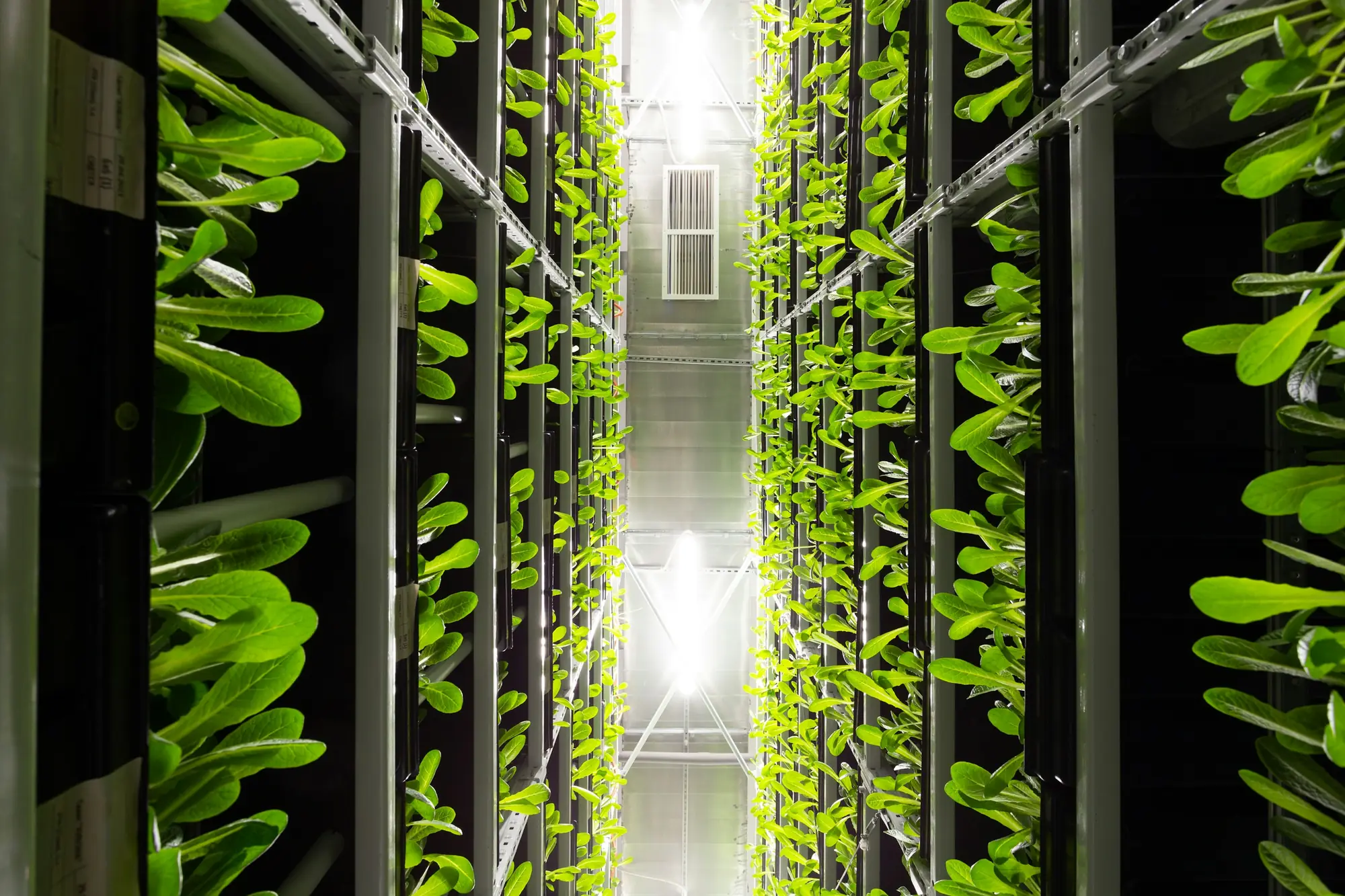
    Vertical / indoor farms stack NFT or aeroponic layers under LED lighting in insulated containers or buildings. Capex is the highest at ₹3,500–4,500 per sqft of footprint (delivering 4–6× the growing area through stacking). Justified by zero pesticide residue, year-round consistency and proximity to premium retail.

    02

    Nutrient Management — EC, pH and Recipe Discipline

    EC (electrical conductivity) controls how much fertiliser is in solution; pH controls how much the plant can absorb. Get these two wrong and even a perfect structure will fail.

    For leafy greens: EC 1.2–1.8 mS/cm, pH 5.8–6.2. For fruiting tomato/capsicum: EC 2.4–3.2 mS/cm rising through the crop cycle, pH 5.8–6.2. For strawberry: EC 1.4–1.8 mS/cm, pH 5.5–6.0.

    Use a two-tank A+B nutrient system. Tank A holds calcium nitrate; Tank B holds the phosphate and sulphate salts. Mixing them undiluted causes calcium phosphate precipitation that clogs drippers.

    Measure EC and pH at least twice daily during early operations. A handheld Hanna or Bluelab meter is sufficient. Calibrate weekly with buffer solutions. Replace nutrient solution in recirculating systems every 7–14 days depending on plant uptake.

    03

    Hydroponics Business Plan — Yield, Pricing and Payback

    A 4,000 sqft Dutch-bucket cherry tomato farm in a peri-urban location typically yields 18–25 tonnes/year with realised price of ₹120–180/kg, payback in 2.5–3.5 years.

    Lettuce NFT (4,000 sqft, ~12,000 plant sites): 8–10 harvests/year × 8–10 tonnes per harvest at ₹150–250/kg wholesale to HORECA. Payback in 2–3 years.

    Cherry tomato Dutch-bucket (4,000 sqft): 18–25 tonnes/year. Selling B2B to premium retail or direct-to-consumer subscription boxes lifts realised pricing 40–60% over mandi.

    Indoor vertical basil (1,000 sqft footprint, 4 layers): 6–8 tonnes/year of cut basil at ₹300–500/kg for premium retail and cloud-kitchen supply. Highest margin per sqft but requires consistent quality control.

    NFT lettuce 4,000 sqft
    ₹72–96 lakh capex, 2–3 yr payback
    Dutch-bucket tomato 4,000 sqft
    ₹1.0–1.3 cr capex, 2.5–3.5 yr payback
    Vertical basil 1,000 sqft
    ₹35–45 lakh capex, 3–4 yr payback
    Checklist

    Pre-Launch Checklist

    Tick off what’s in hand. Anything still open is where the DPR and the scheme file usually stall.

    0/8ready
    Questions

    Frequently asked questions.

    Short answers on hydroponics. The full reasoning is in the guides above.

    Is hydroponics profitable in India?

    Yes, when sited near a premium urban market and operated by a trained team. Margins are highest on leafy greens for HORECA and on premium cherry tomato / coloured capsicum for organised retail. Mandi-only sales models rarely work — hydroponic produce competes with low-cost open-field crops there.

    What subsidy is available for hydroponics?

    Hydroponics qualifies under MIDH if built inside a polyhouse (50% on the polyhouse component). PMFME gives 35% subsidy up to ₹10 lakh for food processing. NABARD Agri Infrastructure Fund offers 3% interest subvention on loans up to ₹2 crore for farm-gate infra.

    How much electricity does a hydroponic farm use?

    A 4,000 sqft NFT lettuce farm consumes around 15–25 kWh/day for pumps and fans. A vertical farm with LEDs consumes 4–6 kWh per sqft of growing area per day — significantly higher. Solar PV with net-metering can offset 60–80% of this.

    Soilless Cultivation

    Get a hydroponics DPR & feasibility

    A crop, a capacity and a location are enough to begin. Share drawings or site photos on WhatsApp if you have them.

    • An engineer calls backUsually the same working day — someone who can talk loads, layouts and schemes.
    • An indicative estimateCapex range, scheme fit and next steps, before any paid DPR work.
    • No obligationYour details are used only to reply to this enquiry.
    Your details
    Your project

    No spam. Indicative estimate only — final quotation depends on site condition, specifications and current material rates.