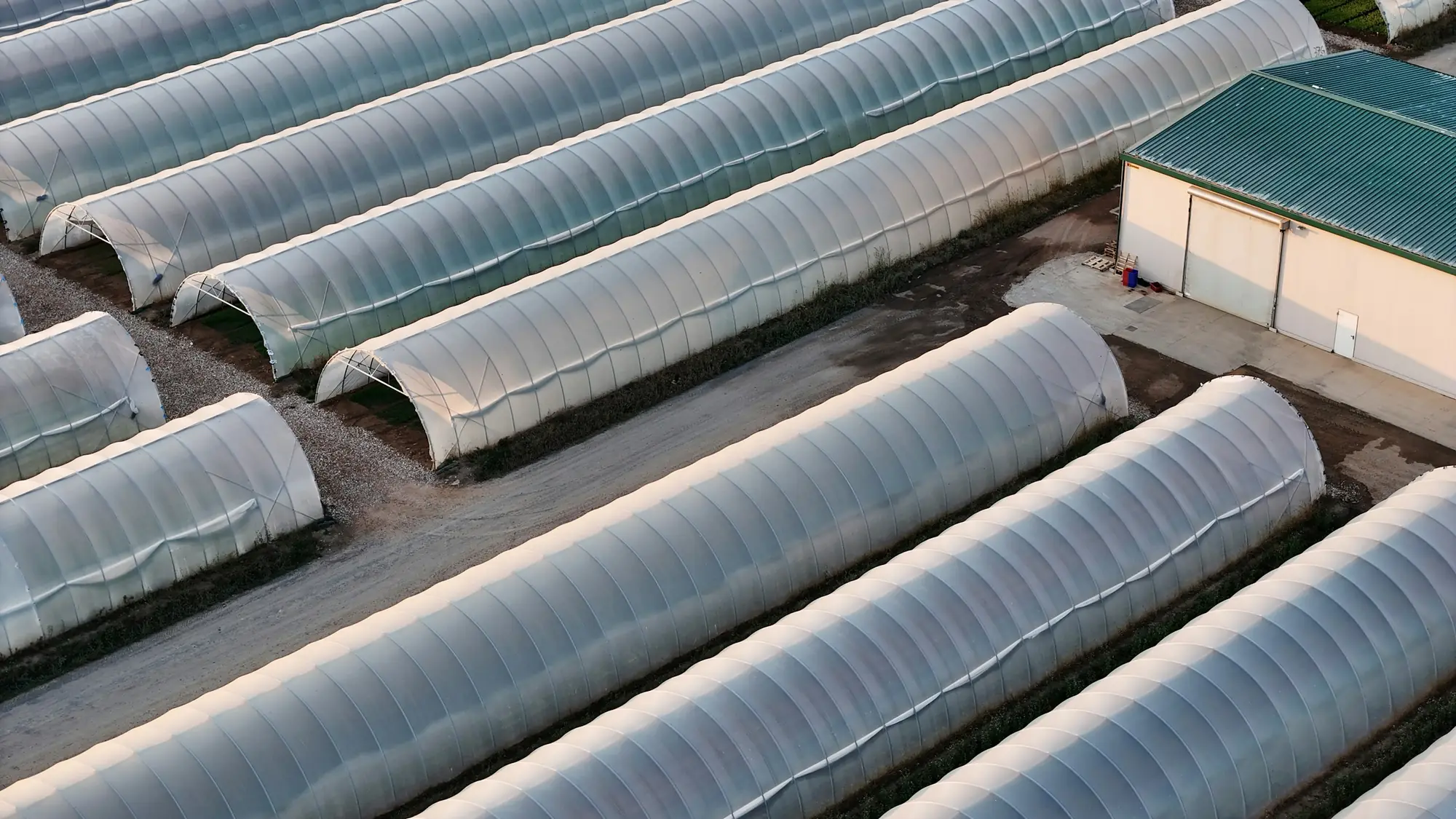
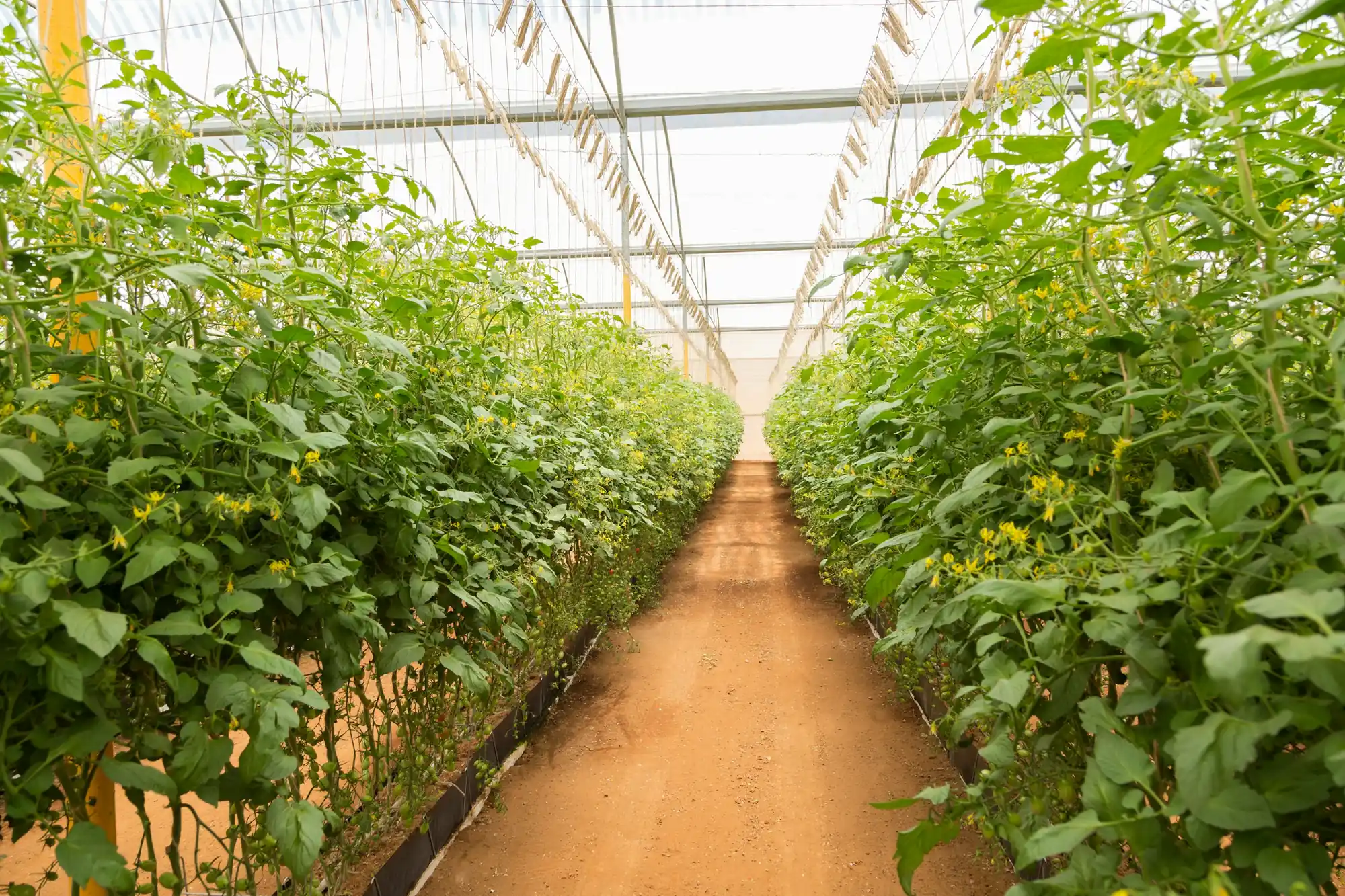
The debate between polyhouse farming and open field farming is one every Indian farmer faces when considering modernization. With government subsidies covering up to 50% of polyhouse costs, the economics have shifted dramatically in favor of protected cultivation. But is it right for everyone?
This guide provides an honest, data-driven comparison across every parameter that matters — yield, cost, ROI, water usage, labor requirements, and subsidy eligibility — so you can make an informed decision.
Yield Comparison: The Numbers Don't Lie
The single biggest advantage of polyhouse farming is dramatically higher yields per acre. Protected cultivation shields crops from rain damage, pest attacks, and temperature extremes, allowing year-round production with consistent quality.
| Crop | Open Field (T/acre/yr) | Polyhouse (T/acre/yr) | Multiplier |
|---|---|---|---|
| Tomato | 10-15 | 80-100 | 6-8x |
| Capsicum | 8-12 | 50-70 | 5-7x |
| Cucumber | 12-18 | 80-120 | 6-7x |
| Rose (stems) | 50K-80K | 2L-3.5L | 4-5x |
| Gerbera (stems) | Not viable | 1.5L-2.5L | ∞ |
Cost Comparison: Investment vs Returns
Open field farming requires minimal infrastructure investment — primarily land preparation, seeds, fertilizers, and labor. A typical acre of open field vegetable farming costs ₹1-2 Lakh per season in operating costs. An NVPH polyhouse on the same acre requires ₹35-50 Lakh upfront (₹18-25 Lakh after MIDH 50% subsidy), plus ₹3-5 Lakh annual operating costs.
However, when you factor in the dramatically higher yields and premium pricing that polyhouse produce commands (30-50% higher prices due to consistent quality and off-season availability), the economics flip decisively in favor of polyhouse farming within 3-4 years.
| Parameter | Open Field (1 Acre) | Polyhouse NVPH (1 Acre) |
|---|---|---|
| Setup Cost | ₹50K-1L | ₹35-50L (₹18-25L after subsidy) |
| Annual Operating Cost | ₹2-4L | ₹5-8L |
| Annual Revenue | ₹3-6L | ₹20-40L |
| Annual Net Profit | ₹1-2L | ₹15-32L |
| Break-Even | Immediate | 2.5-4 years (with subsidy) |
Need Help With Your Project?
Get a free project estimate in 24 hours. Subsidy eligibility check included.
Water Usage: Polyhouse Wins Hands Down
Water scarcity is a growing concern across India, particularly in Rajasthan, Maharashtra, Karnataka, and parts of UP. Polyhouse farming with integrated drip irrigation and mulching uses 50-70% less water compared to open field flood irrigation. The controlled environment prevents evaporation losses, and precise fertigation ensures every drop reaches the root zone.
For regions with limited water availability, polyhouse farming is not just more productive — it's the only sustainable option for high-value crop cultivation.
Labor Requirements
Open field farming requires seasonal labor spikes during planting and harvesting, with significant idle periods. A 1-acre polyhouse requires 4-6 full-time workers year-round for training, pruning, harvesting, and fertigation management. While the total labor cost is higher in a polyhouse, the per-kg cost of production is actually lower due to dramatically higher output.
Risk Profile: Weather, Pests, Market
Open field farming is inherently risky — a single hailstorm, unseasonal rain, or pest outbreak can wipe out an entire season's investment. Polyhouse farming eliminates weather risk almost entirely and reduces pest pressure by 70-80% through physical barriers (insect net, UV-stabilized polythene). Market risk remains for both, but polyhouse farmers have the advantage of off-season production when prices are 2-3x higher.
Subsidy Support Comparison
While open field farming receives support through PM-KISAN (₹6,000/year) and crop insurance (PMFBY), these amounts are marginal. Polyhouse farming receives substantial capital subsidies — MIDH pays 50% of its cost norm (up to 2,500 sqm), NHB pays 35% (45% in NE/hilly areas) on larger projects, and some states add support of their own. Because the subsidy is worked out on the cost norm rather than the quote, the farmer usually still funds more than half of the actual project cost.
When Open Field Farming Makes More Sense
- For staple crops (wheat, rice, pulses) that don't command premium prices
- When land is abundant but capital is limited and subsidy access is uncertain
- For crops like sugarcane, cotton, or oilseeds that don't benefit from protected cultivation
- When the farmer lacks technical knowledge for polyhouse management (training solves this)
When Polyhouse Farming Is the Clear Winner
- For high-value vegetables, flowers, and herbs with premium market access
- When MIDH/NHB subsidy is accessible (AgriMotion handles complete filing)
- In water-scarce regions where efficient water usage is critical
- When the goal is year-round production and consistent income
- Near urban markets where fresh produce commands premium prices
The Bottom Line
If you're growing high-value crops and have access to MIDH/NHB subsidy, polyhouse farming delivers 10-15x the returns of open field farming with lower risk. AgriMotion Engineering designs, builds, and commissions polyhouses across India — from NVPH structures in UP to Fan & Pad systems in Rajasthan — with complete subsidy filing included.