India is the world's largest banana producer, growing over 33 million tonnes annually. Yet, post-harvest losses in banana exceed 25% — largely due to uncontrolled, calcium carbide-based ripening practices that compromise fruit quality, safety, and shelf life. Modern ethylene-based ripening chambers solve this problem while creating a profitable business opportunity.
This guide covers the complete cost breakdown, technical specifications, ROI analysis, and subsidy options for setting up a commercial banana ripening chamber in India.
Why Ethylene-Based Ripening?
Calcium carbide (the "masala" used by most traders) is banned by FSSAI under the Food Safety and Standards Act. It produces acetylene gas, which is a known health hazard. Ethylene, on the other hand, is the natural ripening hormone — the same gas that fruits themselves produce. Controlled ethylene dosing in a temperature-regulated chamber produces uniformly ripened bananas with superior taste, color, and shelf life.
Ripening Chamber Cost Breakdown
| Capacity | Total Cost (₹ Lakh) | Subsidy (35-50%) | Net Investment |
|---|---|---|---|
| 5 MT (single room) | 14-22 | 5-11 | 9-11 |
| 10 MT (2 rooms) | 22-35 | 8-17 | 14-18 |
| 20 MT (4 rooms) | 35-55 | 12-27 | 23-28 |
Need Help With Your Project?
Get a free project estimate in 24 hours. Subsidy eligibility check included.
Revenue Model
A ripening chamber earns through the ripening service fee charged per crate or per kg. The typical pricing model:
- Service fee: ₹0.5-1.5/kg for ripening only, or ₹2-3/kg for ripening + cold storage
- Own trading margin: Buy green bananas at ₹15-20/kg, sell ripened at ₹25-35/kg (₹5-15/kg margin)
- Capacity utilization: A 10 MT chamber running 3 cycles/month processes 360 MT/year
Most successful operators combine both models — running service ripening for local traders while also trading directly. With a 10 MT unit and 80% capacity utilization, annual revenue of ₹25-40 Lakh is achievable, with net margins of 35-45%.
Technical Specifications
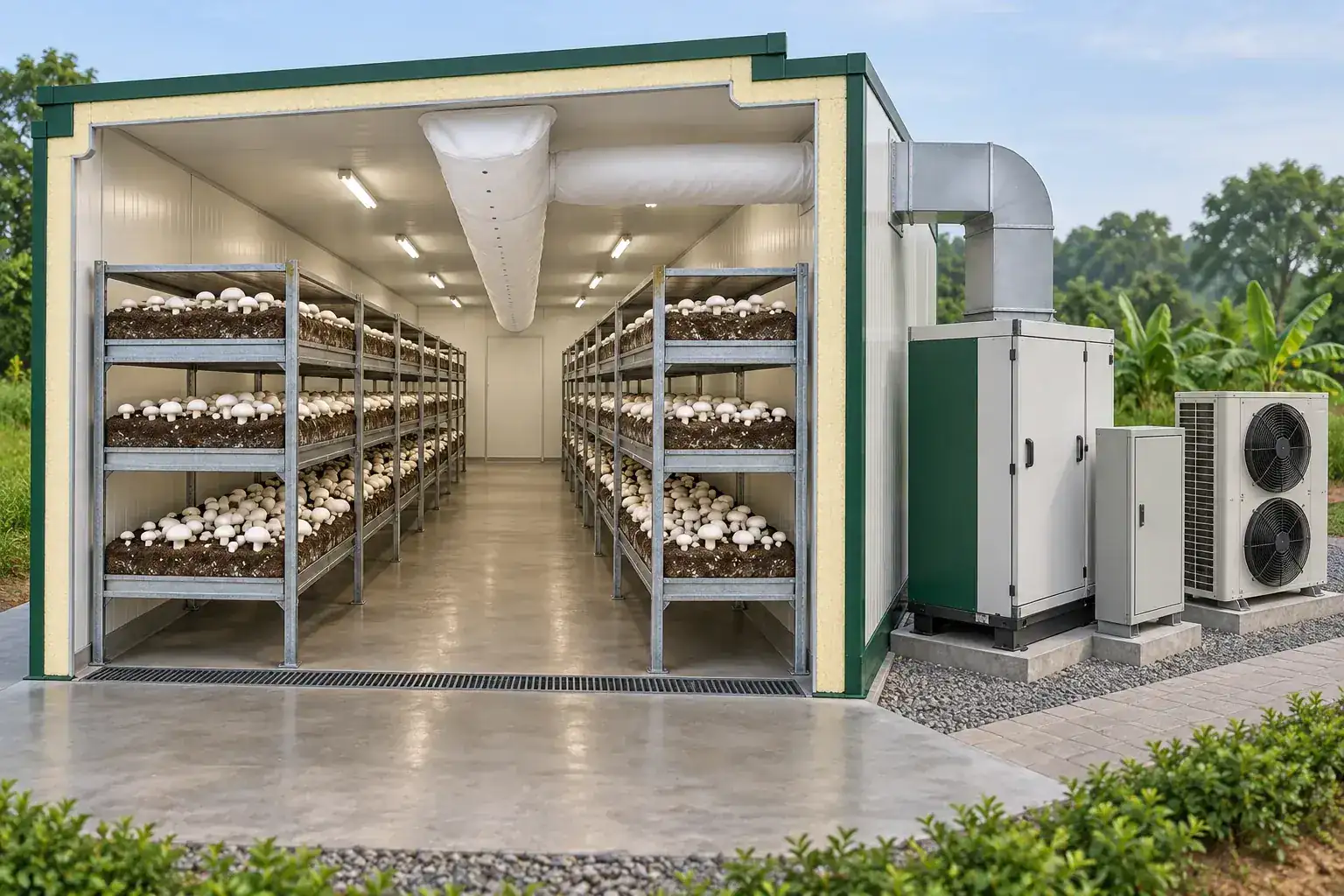
- Temperature range: 14-18°C (adjustable for different fruit stages)
- Humidity: 85-95% RH (maintained via humidifiers)
- Ethylene concentration: 100-150 ppm for 24 hours, then ventilation
- Insulation: 80-100mm PUF panels with food-grade interior coating
- Cooling: Daikin condensing unit with evaporator sized for uniform air distribution
- Controls: PLC-based temperature, humidity, and ethylene dosing automation
- Ripening cycle: 4-6 days for bananas, 3-4 days for mangoes, 2-3 days for papaya
Best Locations for Ripening Chambers in India
Ripening chambers are most profitable near wholesale markets (mandis) or in banana/mango production clusters. Top locations include: Jalgaon & Pune (Maharashtra), Anantapur (Andhra Pradesh), Thiruvananthapuram (Kerala), Bhusawal corridor (Maharashtra-Gujarat), Lucknow-Kanpur belt (UP), and Siliguri (West Bengal).